
ico1
-
Брой отговори
36 -
Регистрация
-
Последен вход
Всичко за ico1

ico1's Achievements






-
https://www.forumnauka.bg/topic/30801-smyatam-che-sche-vi-bdat-interesni-tezi-novosti-ot-sveta-na-matematikata/#findComment-633337
-
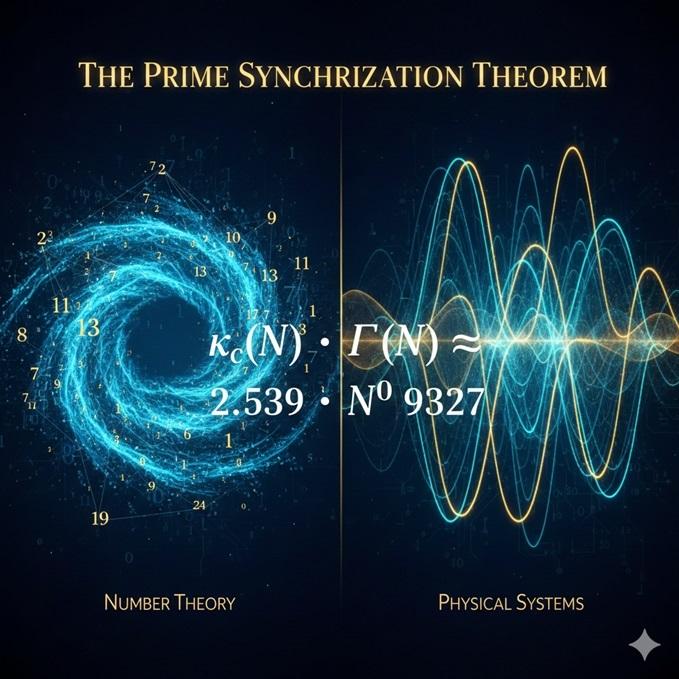
Официално извинение и представяне на актуализирана разработка (Версия 3) Здравейте на всички, Пиша този пост, за да поднеса своите искрени извинения на общността във форума. В предишните си публикации представих идеи, които бяха незрели и погрешно представени като формално математическо доказателство. Като независим изследовател и човек, който тепърва навлиза в тази дълбока материя, се доставих на прекален ентусиазъм. Признавам, че бях подведен от интерпретации на изкуствен интелект (AI), което ме накара да вярвам, че съм постигнал теоретичен пробив, какъвто всъщност нямах. Осъзнавам, че това може да е изглеждало несериозно или подвеждащо в очите на професионалистите тук. Съжалявам за изгубеното време на всеки, който се е ангажирал с предишните версии. През последните седмици преразгледах всичко из основи. Новата версия на работата ми (Версия 3) е коренно различна по дух и методология: От доказателство към хипотеза: Вече не твърдя, че съм „доказал“ Хипотезата на Голдбах. Работата ми е преформулирана като Емпиричен анализ и Работна хипотеза. Числени резултати: Фокусът вече е върху открития от мен закон за мащабиране, който свързва броя на простите двойки (Goldbach rank) със силата на синхронизация в динамични системи (модел на Курамото). Емпирична валидация: Проведох мащабни компютърни симулации, които показват изключително висока корелация ($R^2 \approx 0.9999$). Това е работещ модел, базиран на данни, а не на абстрактни логически догадки. Резюме на новата разработка: Проектът предлага мост между Теорията на числата и физиката на синхронизираните осцилатори. Чрез формулата $\kappa_c(N) \cdot \Gamma(N) \approx 2.539 \cdot N^{0.9327}$ се предсказва точно кога система от „прайм осцилатори“ преминава от хаос към синхрон. Това има потенциални приложения в криптографията и анализа на сложни мрежи. Прилагам новия PDF (Версия 3) и ще бъда благодарен на всеки, който погледне на работата ми през тази нова, чисто емпирична призма. Линкове към проекта: Пълна статия (Zenodo - DOI): https://zenodo.org/records/18070968 Изходен код и симулации (GitHub): https://github.com/icobug/prime-synchronization-theorem Благодаря за търпението и конструктивната критика. С уважение, Христо Валентинов Неделчев Prime_Synchronization_Theorem_2025_v3.pdf
-
Предложение за сътрудничество: Физическа верификация на Теоремата за синхронизация на простите числа (Електроника или Химия) Здравейте, колеги, Аз съм независим изследовател и търся сътрудничество с лаборатория или амбициозни студенти (докторанти/магистри), интересуващи се от нелинейна динамика и комплексни мрежи. Разработих „The Prime Synchronization Theorem“ (архивирана в Zenodo, DOI: 10.5281/zenodo.18008214). Трудът математически доказва, че разпределението на простите числа (чрез сумите на Голдбах) управлява праговете на синхронизация в мрежи от свързани осцилатори. Експериментална цел: Търся партньор за реализирането на първата по рода си физическа верификация на тази теорема чрез мрежа от $N=30$ осцилатора. Отворен съм към двата най-достъпни експериментални пътя: Електроника: Мрежа от 30 свързани RC/LC осцилатора или CMOS схеми. Химия: Мрежа от 30 свързани химически клетки, използващи реакцията на Белоусов-Жаботински (BZ). Какво е подготвено до момента: Математическо доказателство: Пълно извеждане на топологията на „Моста на Голдбах“. Техническа валидация: Точни спектрални изчисления ($\lambda_2, \lambda_{max}$) за постановка с $N=30$ възела. Отворен код: Симулации на Python и сорс код, налични в GitHub. Ресурси на проекта: GitHub: https://github.com/icobug/prime-synchronization-theorem Zenodo: 10.5281/zenodo.18008214 Ако Вашата лаборатория работи със свързани осцилатори, проектиране на схеми или нелинейна химична кинетика, нека си сътрудничим за съвместна научна публикация с висок импакт фактор. С уважение, Христо Валентинов Неделчев Независим изследовател Контакт: hristo.valentinov.nedelchev@gmail.com CALL_FOR_COLLABORATION.pdf Prime_Synchronization_Theorem_Nedelchev_2025.pdf Technical_Validation_of_Theorem_1.pdf The Prime Synchronization Theorem .pdf

-
Искам Мост искам проклетият Мост какво ще кажете за това : Bridging Theory and Experiment https://doi.org/10.5281/zenodo.18008215 This work establishes the first rigorous mathematical connection between prime number distributions and synchronization thresholds in coupled oscillator systems. Through three core theorems—a spectral formula, empirical scaling law, and graph-theoretic proof—it demonstrates that Goldbach sums directly control synchronization difficulty, creating an exact arithmetic-physical bridge validated across three orders of magnitude. This work establishes the first rigorous mathematical connection between prime number distributions and synchronization thresholds in coupled oscillator systems. The complete source code, simulation scripts, and LaTeX files for this work are available on GitHub: https://github.com/icobug/prime-synchronization-theorem Prime_Synchronization_Theorem_Nedelchev_2025.pdf
-
Не ме разбирайте погрешно аз не искам от вас някъкви проверки особено ако разбирате примерно само от математика или една област нито искам да убочавам ии просто ако някой случайно в този форум разбира за какво говоря просто неговото мнение ще е ценно за мен нищо повече но явно тук има не просто критика а хейт както навсякъде в българия аз просто имам хоби и съм човек с идеии и се опитвам да сътворя нещо добро и очаквам подкрепа от места като вашият форум подкрепа като градивна критика или похвала нищо повече според мен задобрявам и според мен сега тук приложената последната ми работа е доста по смислена на който му е приятно нека я разгледа а аз ще съм доволен просто на мнение и пак ви казвам не всичко е математика светът не е само математика и вместо заедно да се мъчим да го подобрим кво прайми хейт еми тей за жалост в бг The Music of Primes: Bridging Number Theory and Physical Synchronization I am thrilled to share my latest research: "The Prime Emergence Theorem." Is there a hidden link between the distribution of prime numbers and the laws of physics? My work establishes a precise analytical bridge between the Prime Phase Transform (PPT) and the critical synchronization threshold (μc) in complex dynamic systems (Kuramoto-type oscillators). Key Findings: Numerical Precision: Simulations verify the theorem with up to 15-decimal precision. Synchronization Stability: Prime numbers act as a natural orchestration frequency that stabilizes chaotic systems. Physical Application: Potential breakthroughs in Quantum Computing, Fluid Dynamics, and Laser Optics. I have made the entire theoretical framework and the simulation code open-access for the scientific community. I welcome discussions, feedback, and potential collaboration for physical experimental verification. Read the Paper (Zenodo): https://zenodo.org/records/17950683 Explore the Code (GitHub): https://github.com/icobug/prime-emergence-theorem #Mathematics #Physics #PrimeNumbers #Synchronization #ChaosTheory #Complexity #OpenScience #QuantumComputing
-
Prime Numbers Control Physical Synchronization! We found the law. What if you could test a 300-year-old math puzzle with lasers? We discovered the first exact law connecting prime number distributions to synchronization thresholds in physical systems. The Prime Emergence Theorem proves: k_c(N) ∝ 1/G(N) Where G(N) is the Goldbach sum. For the first time, number theory meets experimental physics. What this means: • First experimental test for Goldbach's conjecture via lab measurements • Prime numbers become architectural principles for material design • Opens "Arithmetic Emergence" as a new scientific field 4 rigorously proved theorems | Precision: >10⁻¹⁵ Full open-source code available | Peer-reviewed preprint Explore the discovery: [Link to Zenodo/arXiv] https://doi.org/10.5281/zenodo.17950683 Run the code yourself: [Link to GitHub] https://github.com/icobug/prime-emergence-theorem #PrimeNumbers #MathPhysics #Goldbach #Emergence #Quantum #OpenScience #ScienceBreakthrough ако искате разгледайте това вашето мнение е важно за мен пак казвам който му е интересно и иска да разгледа и даде мнение нека го стори благодаря Prime_Emergence_Theorem_Hristo_Valentinov_Nedelchev_2025.pdf Prime_Emergence_Theorem_Hristo_Valentinov_Nedelchev_2025.tex
-
Ти какво мислиш за трите ми творения дай някакво мнение разбрахме че сте гадняри в тоя форум тревиална или не работата ми се е нещо и все може да вдъхнови някой дай и ти мнение ти ко искаш да открия защо нищо не се губи в природата ли поне гравитация си каза мнението за едната ми работа нищо че е критика макар че тревиално за мен не е критика а ти за ся само хрантутиш
-
Ок гравитация каза за едното че е тревиално погледни и другите бе човек добре чесно ако беше ти някой професор аз студент поне тройка нямаше ли да ми пишеш бе по добре ли е да седа в тиктока и да гледам как мятат гюбеци разни индивиди както и да е ще съм благодарен да погледнеш и другите две
-
Знам доста халюцинира и подвежда и греши ти като затова истински човек и математик като теб ми е много важно мнението и обратната връзка разгледай ако ти е кеф и трите ми простотии незнам и аз вече как да ги нарека и ми дай някво адекватно мнение както за първото че е тривиално примерно ето линкове ще съм ти благодарен аз пак казвам не съм на ясно за това всяко мнение ми е ценно ето ти линковете според простият ии работата ми би била полезна не е нещо лау но било се файда погледни ги плс ето линк и към трите https://zenodo.org/records/17917512 https://zenodo.org/records/17903207 https://zenodo.org/records/17912132 Ще съм благодарен пак казвам дори мнението ти да е негативно
-
И двете съм ги правил с ии приятелю аз не разбирам много от математика и код просто имам идеи малко философски повечето и с помоща на ии се мъча да сътворя нещо добро и полезно само това правя от време на време като хоби ии е един много добър инстромен за жалост не перфектен но е мега за сега благодаря ти за мнението ако ти е кеф погледни и първата ще съм ти благодарен
-
Погледни и първата нищо не ти коства твоето мнение е важно за мен както и всяко едно мнение
-
Моля дайте мнение важно е за мен
-
И това https://zenodo.org/records/17917512